
Regen Melbourne acknowledges and respects the Bunurong, Boon Wurrung and Wurundjeri Woi Wurrung peoples of the Eastern Kulin Nation, which is now known as Melbourne. We extend these acknowledgements to all Traditional Owners across the State of Victoria. The knowledge, practices and deep wisdom of the First Nations people of this land guides, informs and drives our work.
This edition some strong themes are coming through around place-based stories, place listening, imagination, art and future stories and, a walk down one of the world’s favourite streets, Sesame Street! First, I’m sharing a theme that is on my mind - place listening.

Place listening
Streets are where the private and public blur, where nature negotiates with infrastructure, where overlooked voices leave their traces. Our streets hold clues of what is actually happening, and if you know how to listen, they tell you everything.
This week, in lieu of sitting in a stuffy room for a meeting, my wonderful colleague Yasmina Dkhissi and I went for a street walk to sit in a pollinator site on a suburban St Kilda street where she had heard Currawongs earlier that morning. Sure enough they were there, high in the trees, cawing each time we had what we thought was a good idea - surely in agreement? When we think about place listening, we absolutely listen to nature. Nature can tell us about the history of place, what is changing and what could be.
That walk, along with some other signals, crystallised something I’ve been sitting with for a while. What does it mean to really listen to place? And can that listening guide the work we do in 300,000 Streets?
I recently read a Substack piece written by UK-based regenerative changemaker Jenny Andersson - The biocultural uniqueness of place. In this piece, Jenny describes her experience of visiting new cities with curiosity, and exploring the essence of these places by reading them. This quote in particular resonated:
I didn’t know it then, but I was already doing it. Reading places. Sensing what was essential in them before I had any language for what essence meant.
Something that brings me joy in life is arriving in a new place and being open, curious and exploratory in learning what it holds. And then closer to home, it is this reading of place and deep listening that tells us what it means to move towards a regenerative city here in Greater Melbourne.
300,000 streets holds a belief that many of the answers, skills and expertise are already out there, embedded in the lived experience of Melbourne’s streets and the people who move through them. Place listening is a method that can help us to tune into this. The Currawongs cawing in agreement, Jenny reading the essence of cities before she had language for it are all the same practice. To move towards the city we want to live in, we have to learn to hear what our streets are already telling us.
How do you place listen? And what does the place you call home tell you?
🔄 Melbourne Shifts
Are you ready to party? If you live in Merri-Bek, it just got a little easier to take your party to the streets. We are celebrating this encouragement to party in the streets from Merri-Bek Council and the conscious effort to remove barriers to gather and create community in the streets.
📄Merri Bek Play and Street Party Guidelines

📚 3 Things to Read
1. Scaling Democratic Innovations
📄 Scaling Democratic Innovations — Democracy Next
🗳️ Why it matters: We need living examples, new models of organising, and new forms of democracy to aspire to. Behind every successful scaling story sits a constellation of organisations doing the essential, often invisible work of building capacity, establishing networks, advocating with decision makers, and ensuring quality standards — and this latest report from Democracy Next gives us the stories!
✨ Highlight: It distills six features of effective scaling catalyst organisations, examines critical tensions and trade-offs, and shows us five frontiers of future practice.
2. This Mayor Showed Her City How to Show Its Work
📄 This Mayor Showed Her City How to Show Its Work — Bloomberg Cities
🏛️ Why it matters: Transparency in local government isn’t just good governance it’s a foundation for community trust and participation. When cities show their work, residents become partners, not bystanders.
✨ Highlight: Anchorage Mayor Suzanne LaFrance recognised that improving a service and helping residents feel that improvement are two very different things. Her insight (that how a city communicates its work matters as much as the work itself ) is a powerful reminder for anyone trying to build trust between institutions and communities.
3. Including Citizens in the Design Process
📄 Practice Notes on Including Citizens — Civic Works
🤝 Why it matters: Designing with communities rather than for them is one of the most powerful shifts we can make. These practice notes offer grounded, practical guidance on doing exactly that.
✨ Highlight: Written by our friend Jack Strachan, this piece is full of wisdom from the field. Our favourite: the "milk carton vs flavour" framing proposes that practitioners provide the participatory scaffolding and safety, while the community brings its own identity, lived experience and direction. Relational, generous, and deeply practical.
🎧 3 Things to Hear
1. U is for Urbanism
🎙️ U is for Urbanism — 99% Invisible, Episode 649
🏙️ Why it matters: Everyone’s favourite street, Sesame Street, has been teaching children their ABCs for over 50 years but also, quietly teaching what makes a great neighbourhood. The creators wanted to give children a vision of how urban life could be, and it turns out they were drawing directly from the Jane Jacobs playbook: mixed use, short blocks, density, eyes on the street.
✨ Highlight: Many people have reflected that Sesame Street is why they always wanted to live in a walkable neighbourhood. On a show with talking monsters and a giant yellow bird, it showed that the stories we tell children shape what they believe is possible.
2. Six Walks
🚶 Why it matters: Six audio walking tours commissioned by the Australian Centre for Contemporary Art invite six Melbourne-based writers to develop a narrative response to areas of the city that hold particular meaning for them. Written largely during COVID lockdowns when walking was one of few freedoms afforded to us in Melbourne, these walks trace desire lines as much as designated paths. Tackling everything from public housing to colonisation, gentrification, resilience, and pleasure, walking becomes a form not only of art and literature, but of thinking, observing, remembering, poetry, protest, and mapping.
✨ Highlight: Writers Idil Ali, Timmah Ball, Tony Birch, Sophie Cunningham, Eleanor Jackson and Christos Tsiolkas take us from the Birrarung to Royal Park revealing a complex, layered portrait of Melbourne constructed from diverse, diverging and overlapping cultural, social, and historical paths.
3. Play as Catalyst
🎙️ Play as Catalyst — Open House Melbourne
🛝 Why it matters: Cities are not only for living and working but also places where we play. Play can be creative and active, or reflective and imaginative. Stories of our future are just as important as stories of today.
✨ Highlight: Friend of Regen Melbourne Professor Lisa Grocott from Monash University and artist Mike Hewson explore the ways a playful mindset can foster connection and creativity in the city and how design can nurture those playful connections in an urban environment.
📅 Things to Do
Apply for a Grant to Activate Your Street
💰 Two great opportunities to fund street-level activation right now:
Community Mobilisation Workshop — Greater Melbourne
👐 If you are a community leader in Greater Melbourne — don’t miss this practical workshop designed for people doing the hard, essential work of mobilising communities across our city.
🌟 Streetlight on Place
Tree Art Installations In Northcote: The Story of Oxford St.
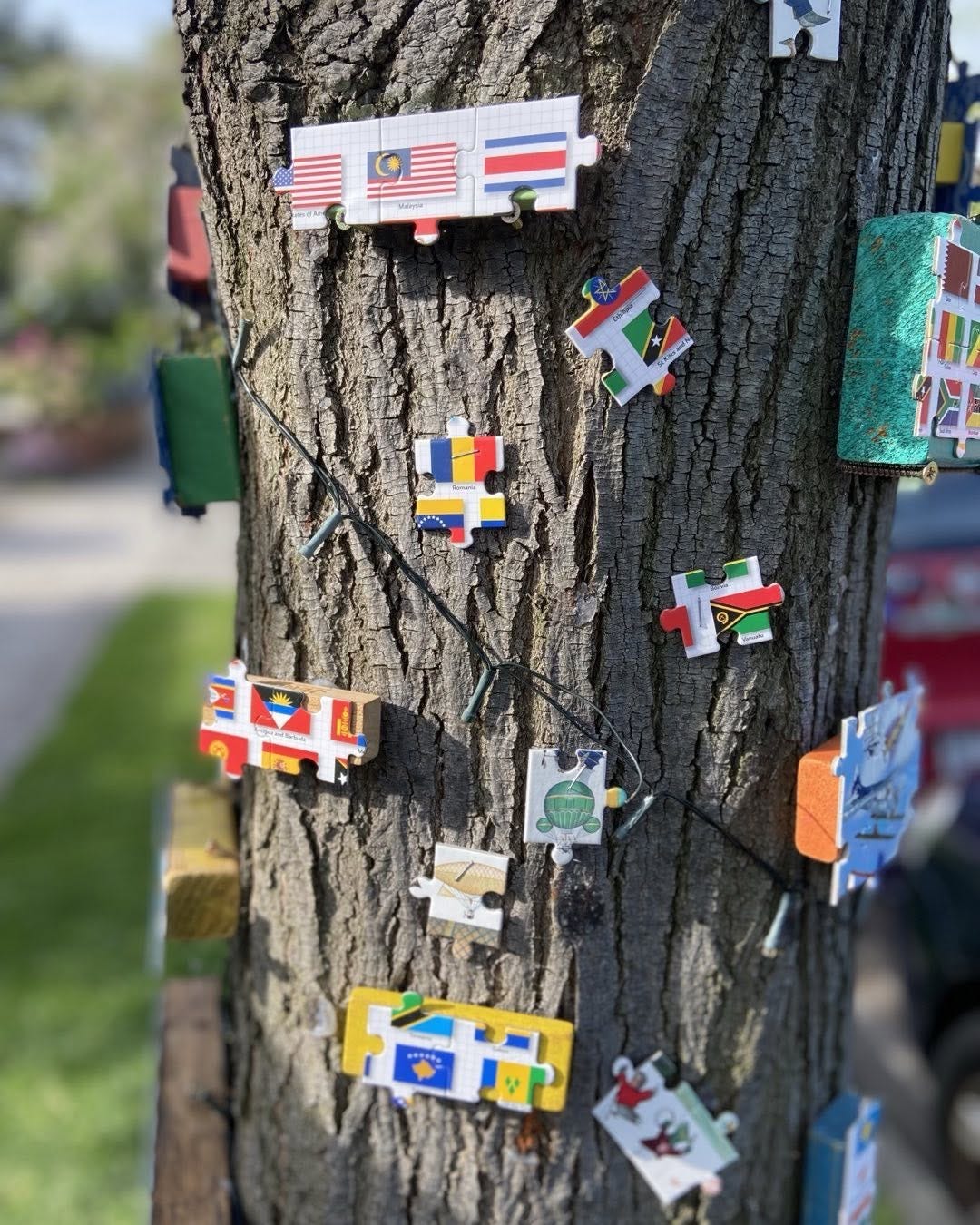
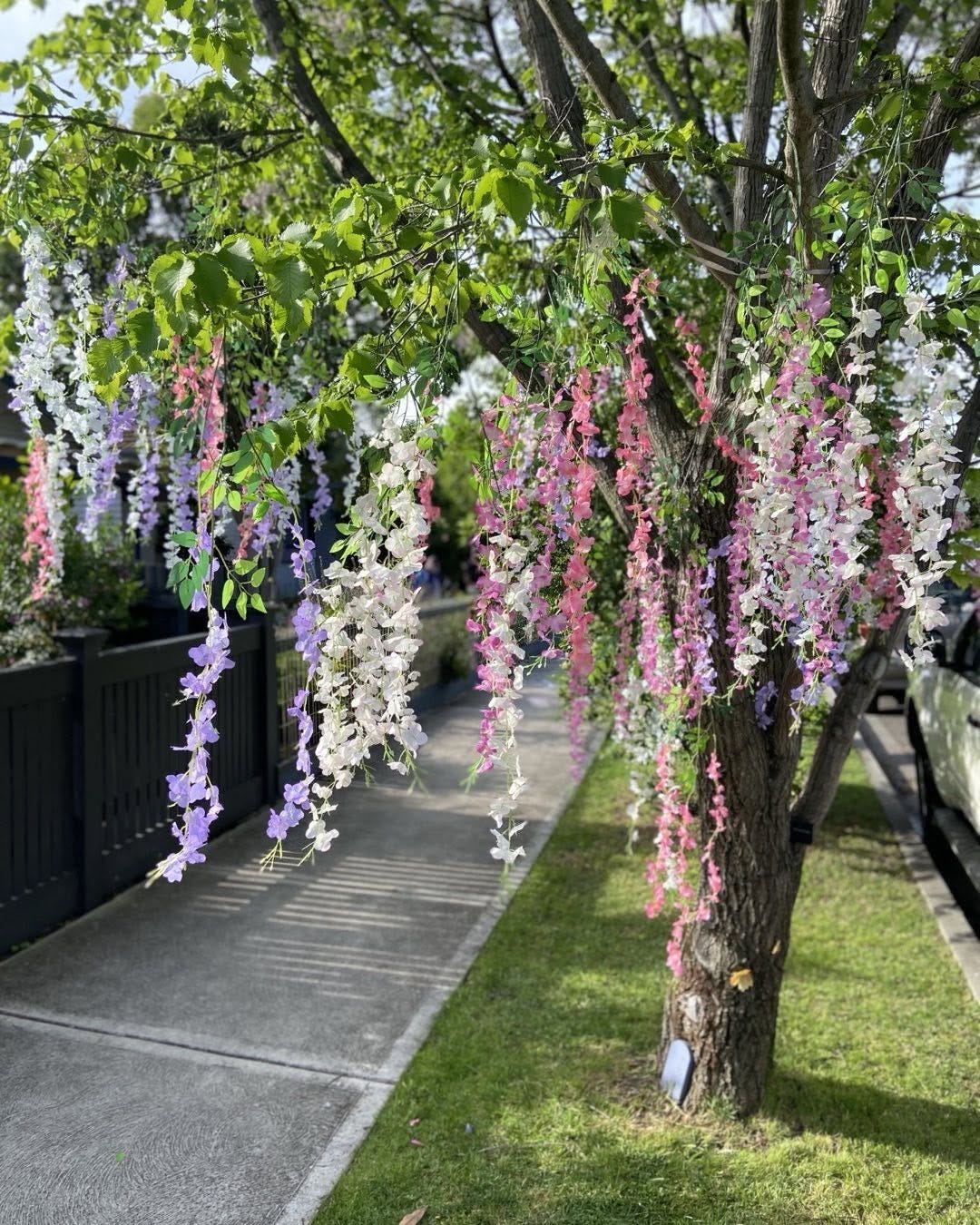
Oxford Street in Northcote has become known for something unexpected: trees dressed in art. What started as a small idea during the COVID-19 lockdown has grown into an annual tradition that brings neighbours together, inspires creativity, and transforms an ordinary street into a seasonal art gallery.
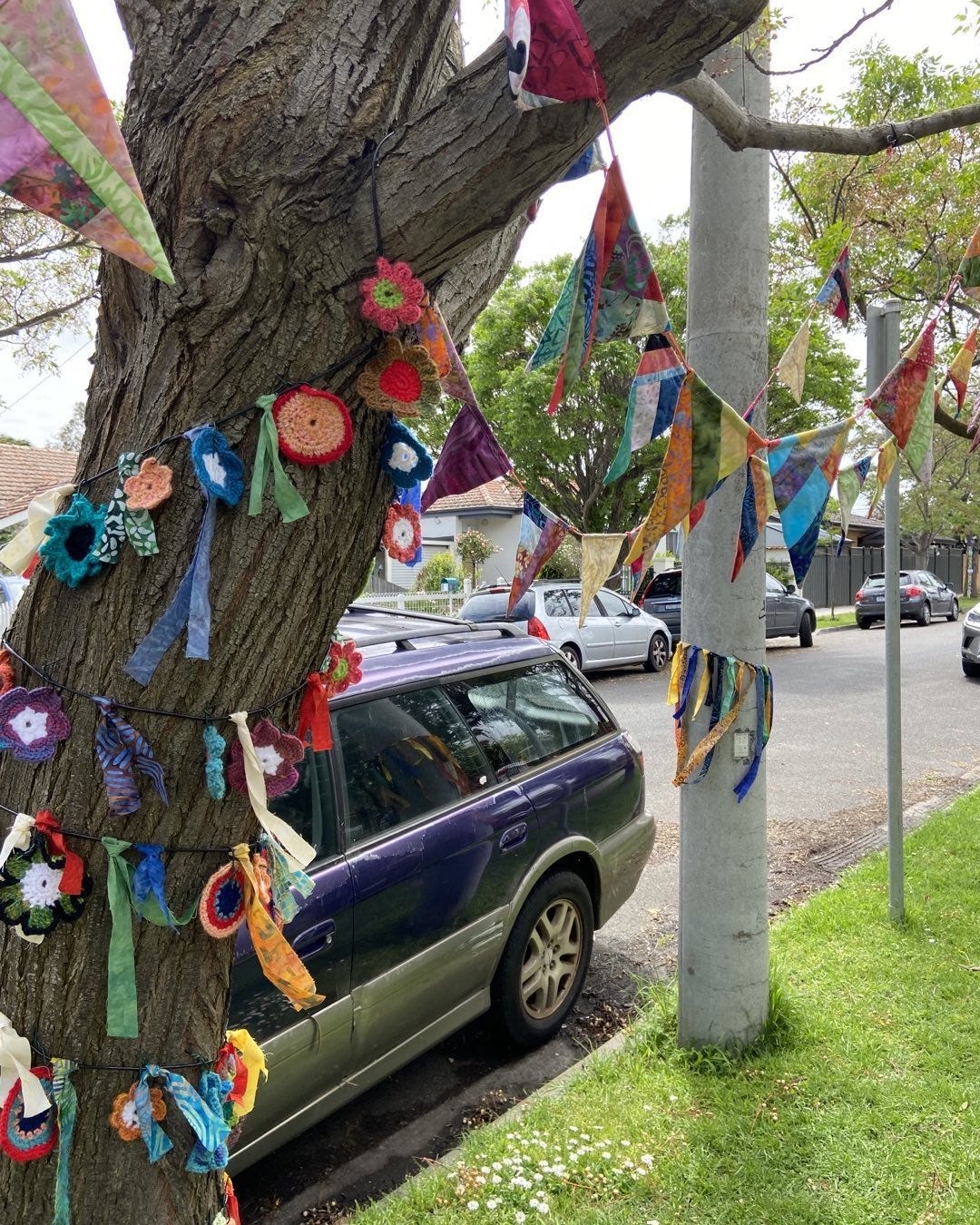
“Doilies and bunting”- via @oxford_street_art, Instagram
From Lockdown to Tradition
Oxford Street’s first experiment with tree art began in 2020, during the long period of lockdown. A neighbour suggested a community exhibition to Matt Clare, a graphic designer living on the street. Looking at the rows of nature‑strip trees, Matt imagined them as natural canvases.
That October, he and a handful of neighbours decorated the trees with recycled materials and handmade designs in the lead‑up to Halloween. On the 25th, the street held its first “opening night.” Families gathered outdoors, admired the displays, and shared food and drinks. The simple act of decorating trees quickly became a tradition, returning each year and embedding itself in the neighbourhood calendar.
Back then, Oxford Street was an ordinary residential strip, quiet and unremarkable. Yet the presence of colour and creativity hinted at its potential as a place of connection. Over time, the project grew. Local artists, architects, and even primary school teachers encouraged students to contribute. What began with a few neighbours became a wider collaboration, with children, families, and visitors all adding their touch.
via @oxford_street_art, Instagram
Challenges
The Oxford Street Art Project quickly revealed both its potential and its difficulties. While many neighbours embraced the idea, participation was uneven. Some families were too busy, others lacked confidence in their artistic skills, and the street-level communication groups were filled with irrelevant arguments, making coordination more difficult. “It’s hard to know if people want to join — just because you live here doesn’t mean you have to,” he explained. “I don’t want to be someone cracking the whip. Some people don’t have time, some have never done anything like this, and likely never will. That’s okay.”
Sustainability also proved a challenge, as much of the organising fell on Matt, from designing flyers to door‑knocking for support. Attempts to involve schools and new residents helped, but momentum was fragile. Balancing grassroots energy with potential council involvement, managing resources, and ensuring artworks respected the trees all required constant negotiation and care.
via @oxford_street_art, Instagram
Matt’s reflections
For Matt, the project is less about art and more about community. He sees his role as keeping the entry point low enough for anyone to participate, while ensuring the event remains engaging. “Making it a competition is the exact thing that will deter people,” he said. “It’s about having a go.”
What matters most to him is the atmosphere the project creates. “The joy I get from it is the opening night—everyone’s out on the street, families coming, people chatting with drinks and food. Last year it even lined up with Diwali, and our Indian neighbour decorated their tree for it with snacks—that crossover, that sense of community, is the best part.”
Looking ahead
Today, the Oxford Street project has demonstrated that using art installations as a form of street regeneration is both practical and effective in improving the local environment. Yet its influence extends far beyond aesthetics. By transforming streets, the program fosters dialogue among diverse groups, promotes inclusion, and deepens community cohesion.
Looking ahead, the Oxford Street project has always been about more than decoration. Encourage more community stakeholders to participate while keeping the entry threshold low. Its true purpose lies in creating a space where neighbours feel welcome, connected, and proud of their street.
“I want to broaden it—this year, I’m thinking of formalising collaboration with the primary school, letting different art classes take multiple trees. If it loses momentum, I’ll open it to the broader community too,” Matt said. For him, sustainability is key. The project must not depend on one person’s energy but be shared among a handful of committed neighbours.
🚶 Got an idea, story, or initiative that reshapes how we think about streets, community, or regeneration?
We’d love to hear it! Whether it’s a local project, cutting-edge research, or a spark of inspiration, share it with us to feature in our next edition. Let’s amplify your vision together! 🌟
Send us an ✉️ at nina@regen.melbourne
Loved this concept of reading or just being in your streets, and off our phones…looking up and switch on your senses.
Also when I read 300k street libraries I said yeahhh !! Thinking of the lil street libraries with the books inside. Maybe 300k is a lot but one third of them, would be amazing. Another way to connect with your neighbours…